
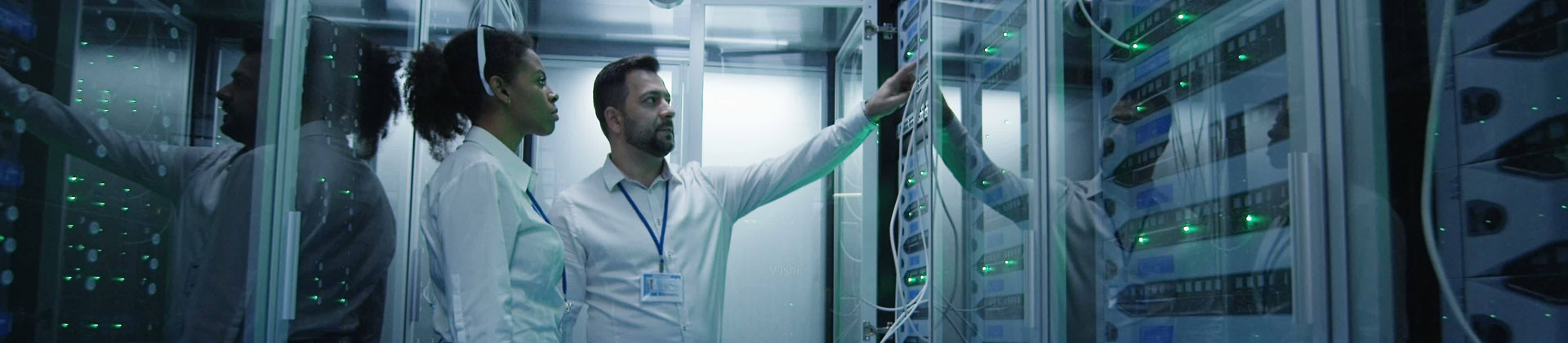
As a one-stop liquid cooling solution provider, we specialize in customized full-liquid cooling data center solutions for the ICT industry, IGBT,Semiconductor,Renewable Energy industry, covering design, deployment, and maintenance. Our high-efficiency liquid cooling technology reduces PUE, helping clients achieve sustainable data center upgrades
Revolutionizing Power Electronics: Liquid Cooling Technology for IGBT Modules
In the era of high-efficiency energy conversion, Insulated Gate Bipolar Transistors (IGBTs) serve as the "CPU" of power electronics, driving innovations in electric vehicles, renewable energy, and industrial automation. However, their high-power operation generates intense heat (200-500 W/cm²), demanding advanced thermal management. Liquid cooling technology emerges as the ultimate solution, offering unparalleled efficiency and reliability.
Traditional air cooling struggles to dissipate heat from IGBT modules operating at frequencies exceeding 20 kHz. Liquid cooling, leveraging fluids with 1,000x higher thermal conductivity than air, ensures:
Precise Temperature Control: Maintains junction temperatures at 80-120°C with ±2°C variance, preventing efficiency loss.
Compact Design: Aluminum or copper-aluminum alloy liquid cold plates reduce weight by 60%, ideal for space-constrained applications like EV inverters.
Longevity: Closed-loop systems with corrosion-resistant coatings extend lifespan to 10+ years, cutting maintenance costs.
Microchannel Cold Plates
Engineered with serpentine flows, these plates maximize heat transfer for ultra-high-frequency IGBTs
Blown-Flat Cold Plates
Cost-effective and leak-proof, these are widely used in industrial inverters and rail traction systems.
Foam Metal-Enhanced Plates
Open-cell foam metals disrupt thermal boundary layers, boosting heat dissipation by 40% in SiC-IGBT hybrids.
Electric Vehicles: A leading EV manufacturer reported an 8% range increase after adopting IGBT liquid cooling.
Renewable Energy: Solar inverters with liquid-cooled IGBTs achieve 99% efficiency under 45°C ambient temperatures.
Smart Grids: High-voltage DC converters use modular liquid cold plates to handle 10MW+ power loads.
Emerging trends include:
AI-Driven Thermal Management: Predictive algorithms adjust coolant flow in real-time.
Eco-Friendly Fluids: Non-toxic dielectric liquids like Galden® reduce environmental impact.
Conclusion
Liquid cooling technology is not just a thermal solution—it’s the backbone of next-gen power electronics. From silencing data center servers to propelling electric buses, it redefines what’s possible in energy efficiency.